Sadly, the start of the 2026 F1 season has been an unmitigated disaster. On top of the Bahrain Grand Prix and Saudi Arabian Grand Prix being cancelled due to the war in the Middle East, new regulations have sparked anger and confusion.
Massive changes to the power unit resulting in a roughly 50/50 split between electrical power and internal combustion engine power has completely changed the sport. Drivers have had to learn all new ways of managing and deploying power around the track.
Many of them have been very vocal in expressing their complaints. Four-time world champion Max Verstatppen called it “anti-racing,” adding: “It’s terrible…. If someone likes this, then you really don’t know what racing is about.”
The FIA responds
F1’s governing body, the FIA, recently responded with various changes to the regulations intended to make power management more sensible and reduce safety risks caused by the new technology.
These changes will take effect at the Miami Grand Prix during the first weekend in May. Below we break down what they mean for racing.
Tweaking electrical power in qualifying for more flat-out laps
So far this season, drivers have had to heavily manage battery deployment even in qualifying, which is supposed to be the one session where they can push 100%. Instead, drivers were lifting off straights or compromising lap pace just to recharge their battery.
The FIA has responded by reducing the amount of allowable energy recharge by one-eighth, which should cut down on the time drivers spend lifting off the accelerator to refill the battery.
Moreover, drivers should now be able to charge their battery more quickly, as the maximum amount of power they can harvest while at full throttle (a tactic known as super-clipping) has been increased by 40%.
Capping driver boost to reduce dangerous speed gaps
The new power units introduced aggressive “boost” modes for drivers to utilize, which in some cases created huge closing speeds between cars, especially when one driver had energy available and another didn’t. That raised legitimate safety concerns, particularly into braking zones.
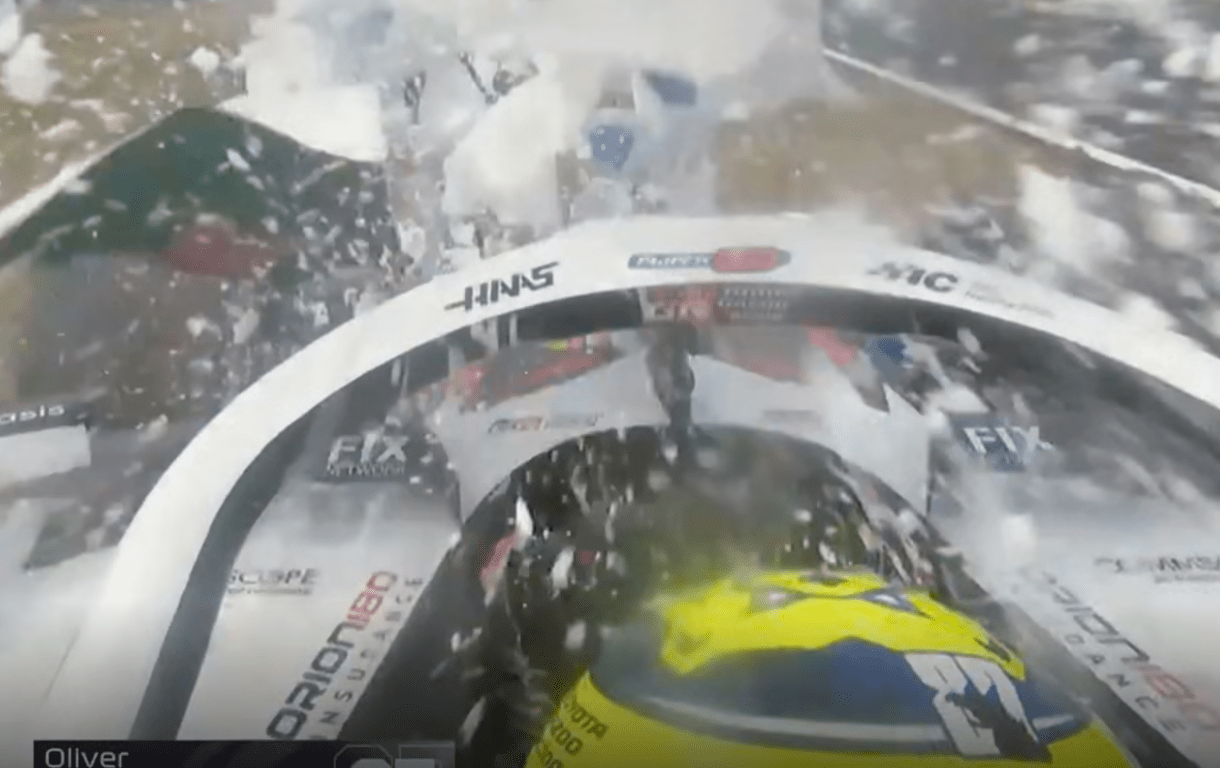
This situation has been blamed for Oliver Bearman’s terrifying crash at the Japanese Grand Prix earlier this season. Bearman was using boost mode when he came up behind the car driven by Franco Colapinto, who was recovering electrical energy. Bearman had to swerve off track to avoid hitting Colapinto and sustained a 50G crash into the safety barrier.
By capping boost output at 150 kilowatts (kW), the FIA hopes to narrow these speed differentials. The aim is to preserve overtaking opportunities while reducing situations when drivers are moving into corners with unpredictable and potentially unsafe speed deltas.
Another change limits drivers to deploying just 250kW out of a maximum 350kW on most parts of any given lap. They can only use the full 350kW in “straight-line mode” zones. Again, this is intended to reduce dangerous speed differentials into and out of turns.
With the deployment of electrical energy, and its subsequent recovery now an integral part of F1, Bearman was using his boost mode while Colapinto was recovering energy, hence the big difference in speed.
Changes to race starts to avoid battery problems
So far in 2026, race starts have been more chaotic because of differing energy states among cars on the starting grid resulting in inconsistent torque delivery from the power units. Some drivers were getting massive launches, while others lagged due to battery conditions rather than driving skill or car setup.
The FIA has adjusted how energy deployment works off the line to standardize starts more. In Miami, F1 will begin testing new race-start procedures. These include:
- New low-power-start detection technology will pinpoint cars without enough energy to accelerate off the line.
- The system will automatically shunt electrical power to the crankshaft to, in the FIA’s words, “ensure a minimum level of acceleration and mitigate start-related risks without introducing any sporting advantage.”
- Flashing lights on the cars’ rear and sides will alert other drivers when the technology kicks in, hopefully reducing the chances of collisions.

 Full Throttle Media