Dan Candee didn’t enter motorsports through privilege, connections or a polished plan. He arrived with a beat-up BMW, a handful of friends and a relentless passion to be part of the motorsports world. But what makes his story special is where he started: Transforming his life after rehab, homelessness and searching for a positive outlet for his obsessive drive.
Nearly 16 years ago, Candee found himself at rock bottom. He describes that period bluntly. He was a recovering alcoholic who was living in his car, emerging from rehab with little more than determination and the need to rebuild. “I had to figure out what mattered most,” he recalls. “I needed to take some of my obsessive tendencies and put them into something healthy.”
He knew he needed to embrace his newfound sobriety, rebuild his spirit, reestablish trust and relationships with family and community, and find his lost professional capabilities.
Two dreams rose to the surface that ignited his lost passion and gave him a path forward: First, his simple desire to get a chocolate Labrador. Second, he wanted to drive race cars.
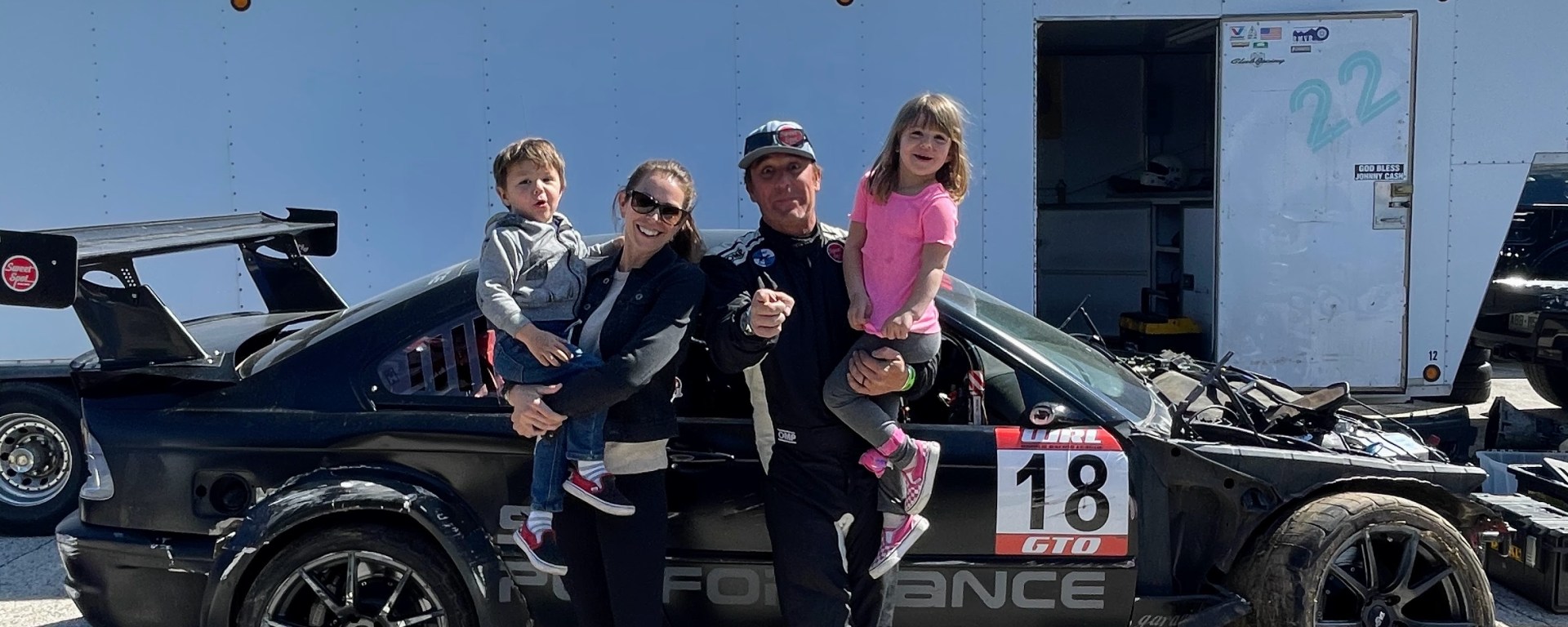
Today Candee has come all the way back. He’s the CEO of a fast-growing tech company and also has built and owns Sweet Spot Racing, a group of amateur drivers and crewmembers that participate in events all over the U.S.
Hopefully his journey will not only entertain but also enlighten and inspire those of us who love motorsports — and have always wondered what it takes to compete.
An early love for racing
Like most of us, Candee was bitten by the racing bug early in life. At age 4, his uncles took him to Road America in Wisconsin. It was love at first rumble. He spent his youth building and driving bikes and cars, as well as watching races and visiting tracks.
He has a vivid memory of being in Toyko watching the 1994 Japanese Grand Prix, as Damon Hill and Michael Schumacher battled each other in torrential rain. (Hill would win the weather-shortened race on best aggregate time.)
In 2009, as the U.S. economy struggled to recover from the financial crisis, Candee was living in Boulder, Colorado, struggling to recover from his own personal alcohol crisis. After successfully completing rehab, at one point he was living out of a 1998 Ford SVT Contour in a parking garage.
Motorsports wasn’t exactly a logical next step.
Candee began helping one of his mentors restructure an architecture firm through bankruptcy just as he began to restructure his life. He did get that chocolate Lab he had dreamed about. Then he began to focus on his other dream — a healthy outlet for his obsessiveness: auto racing.
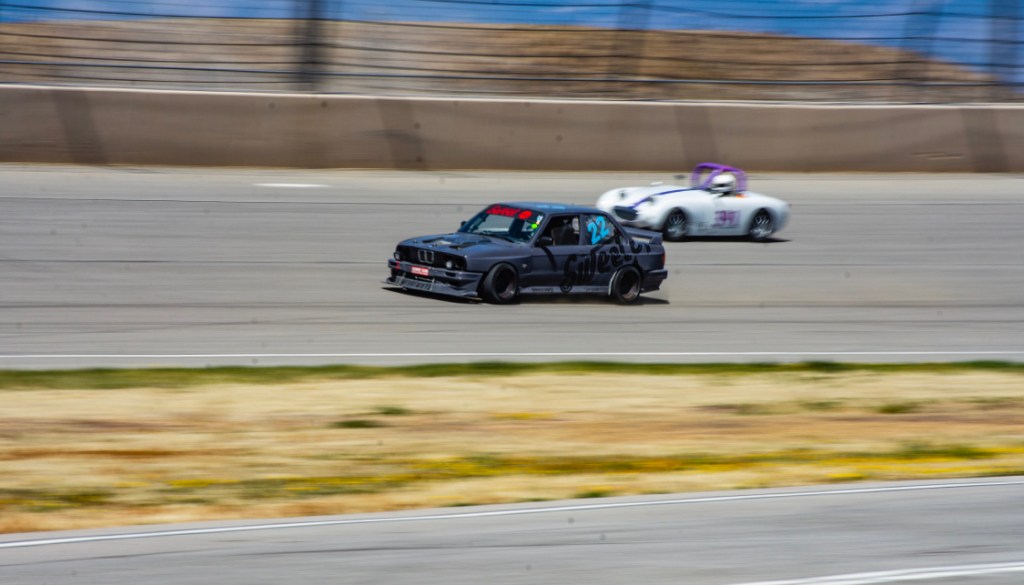
He scraped together $1,000 and purchased a 1988 BMW E30 that had previously raced in the 24 Hours of Lemon, a tongue-in-cheek, community-oriented series featuring cheap clunkers running endurance events. The E30 had 265,000 miles on the odometer, a roll cage and little else going for it. “It was the ugliest car north of Texas,” he jokes.
But it was enough.
A humble and humbling start
Candee and his girlfriend Kate, now his wife, began rebuilding the car together. Friends joined in, some with mechanical skills, some without. Craigslist connections turned into friends and crew. Family members joined. It was messy, scrappy and entirely grassroots.
Then they did something bold: They entered a 24 Hours of Lemons race before Candee or the newly rebuilt car had ever participated in a track day. Other than a few trial runs on a dirt road, they had never seen the E30 perform.
“I had no idea what I was doing. I had never been on that track. I didn’t know if it went left or right, other than reading the map,” he remembers. After a few laps, their BMW began sputtering. Candee assumed a mechanical failure and pulled into the pits. But the team couldn’t find the problem. Candee went back out, but the car soon died and had to be towed to pit road.
After tearing apart the car to find the fault, they finally checked the gas tank. That’s right: They had forgotten to fill the tank — and of course the car didn’t have a fuel gauge.
That moment, while humbling, set the tone for everything that followed. Candee wasn’t deterred. Instead, he leaned deeper into the process, building both racing knowledge and relationships. “I’m not a mechanic by training,” he says. “But I wanted to drive. And to drive, you have to build the car, maintain it and rely on a team.”
Creating a racing family
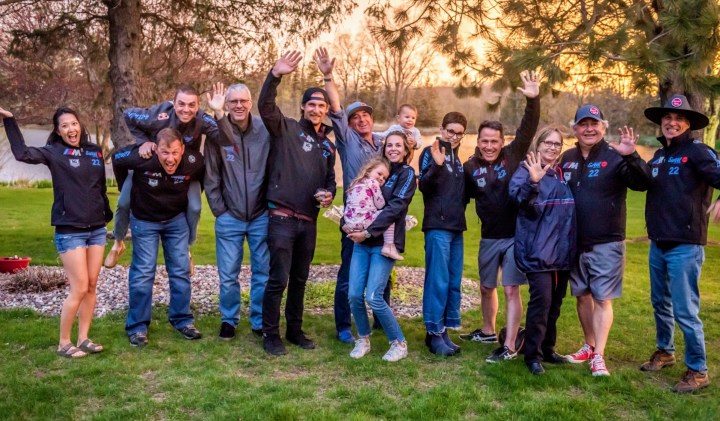
That team became central to his life journey. One member knew engines. Another was a professional mechanic. A mentor in his 70s understood BMWs inside and out. Others brought enthusiasm and a willingness to learn. Together, they formed a collaborative environment that mirrored what Candee would later build in business.
At the same time, he was learning to race, Candee was also building companies. He became involved in a startup tech firm called Connect First, which he helped grow from five employees to more than 50 before it was acquired. The parallels between racing and entrepreneurship became obvious to him. Both required resilience, iteration, teamwork and creativity.
“As a business owner, you’re always trying to find that extra traction, the next two percent,” he says. “Racing is the same way. You’re constantly looking for small improvements that add up to performance.”
Candee reached another fortuitous turning point when he attended racing school at Rocky Mountain Vintage Racing. “They have an incredible school,” he says. “It changed my life, because that’s where I met that community of men and women who welcomed me to this world. I learned this is a safe, fun place to play with cars, and all my obsession could find a healthy spot.”
Attracting sponsors
Candee immersed himself in endurance racing, a format he particularly loved for its team-oriented nature. Eventually, he and his group formed what would become the Sweet Spot Racing team.
Funding, however, remained a challenge. Like most grassroots racers, Candee couldn’t rely on deep pockets. Instead, he learned to build partnerships. His approach to sponsorship was straightforward and practical.
“It starts with knowing what you like and what you need,” he explains. “Use products you believe in, then reach out to those companies. Call them, email them, tell them you believe in their product and how you’re using it.”
Rather than expecting free gear, Candee focused on forming personal relationships with sponsors and prospects. Discounts led to deeper collaborations. Over time, he attracted sponsors such as Hawk, Bilstein, BimmerWorld, SCR and Wine Country Motorsport, testing products and providing feedback. Some partners even attended races to see their components in action.
“Most of the time, it’s not free,” he says. “But if you prove value and show passion, those relationships grow.”
Focusing on performance and people
For people considering entering motorsport, Candee’s advice is simple: start small and start now. You don’t need a large budget or professional background. Entry-level endurance racing, track days and local clubs provide accessible pathways.
“Race school doesn’t have to cost five grand,” he notes. “There are clubs in every state. There’s a place for everyone.”
He also stresses the importance of community. Motorsports, particularly at the grassroots level, is as much about people as performance. Teams share tools, knowledge and encouragement. Many participants volunteer their time simply to help others succeed.
He recalls recently giving away one of his spare differentials to a racer who couldn’t afford one. “I’m finally on the other side. Now I get to help someone,” he says. “The cars are great. But when you leave the track, what you remember are the people.”
Looking back, Candee sees motorsports as more than a hobby. It became a framework for rebuilding his life: channeling obsession into discipline, creating friendships and reinforcing lessons that carried into his professional success.
Today he is CEO of Cork Cyber, a company that provides cyber risk visibility and financial protection to small and mid-size companies. So, again, his focus is on helping other people succeed. In this case, Cork Cyber protects businesses from cyber threats and makes them financially whole if they are attacked, providing funds for remediation immediately while cyber insurance claims can take weeks or months to process.
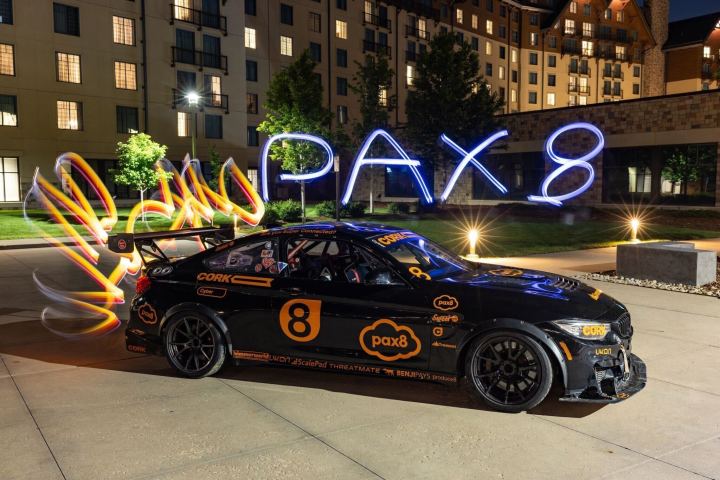
His Sweet Spot Racing team is still going strong. Cork Cyber, Pax8, ScalePad, DVx and other technology companies are sponsors. The team has featured owner-drivers of mainly BMWs ranging from a 1972 2002 tii to a modern M4 GT4. Today, Sweet Spot has six cars in the stable. They run a light race schedule, but they’re heavy on track days, education, race training and sponsored Cork Cyber and partnership days.
“I was too late and too slow to become a professional racer, but I found that building a successful endurance racing team has a lot in common with building a successful business. Both are filled with long hours, incredible joy, heartbreak and reward,” he said. “You put more into something, you get more out. That applies to racing, business and life.”