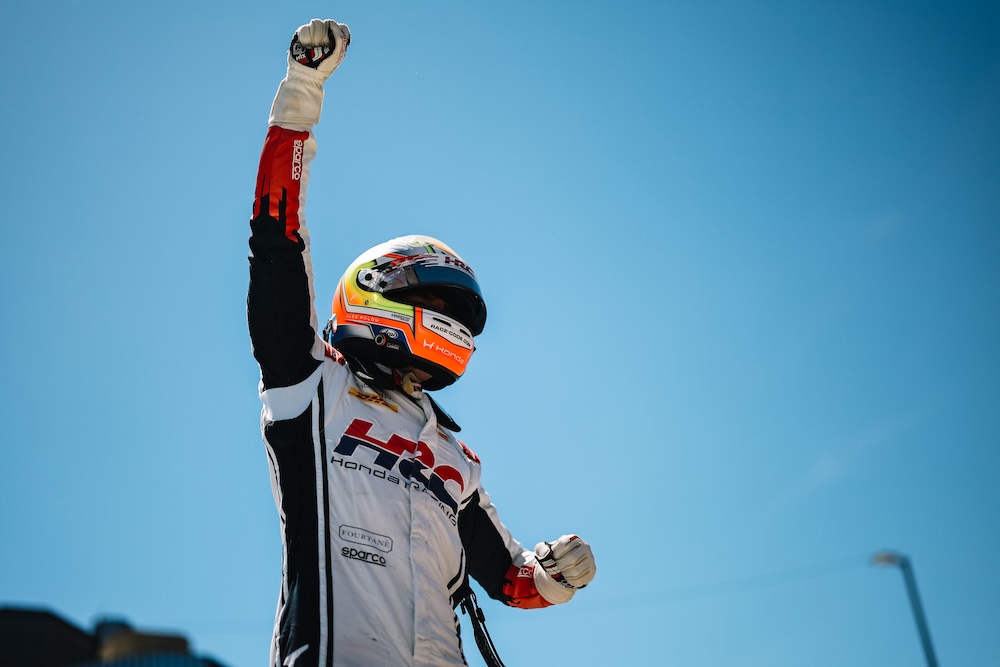
Alex Palou won another IndyCar race on Sunday. By itself, that sentence might make some fans think they already know how the story ended.
After all, the three-time champion has made a habit of starting near the front, controlling races, and cruising to victory. But the Chevrolet Detroit Grand Prix was anything but routine.
What unfolded across 100 laps on the streets of Detroit was a wild mix of strategy, caution flags, damaged race cars, angry drivers, and constant position changes. Yes, Palou ultimately stood on the top step of the podium, but getting there was far from easy.
The Chip Ganassi Racing driver earned his fourth victory of the 2026 season and the 23rd of his IndyCar career, but he spent much of the afternoon fighting through changing circumstances rather than simply dominating the field.
“Honestly, it was a tough one, very tough one,” Palou said after the race. “But the team did an incredible job once again with the strategy.”
That strategy proved to be the difference.
While many teams mixed their tire compounds throughout the race, Palou and strategist Barry Wanser chose a plan that put alternate tires on the car for the first two stints before switching to the more durable primary tires for the finish.
At first, it did not appear to be the winning move.
Palou led early but lost the top spot to Will Power as his alternate tires began to wear out. He even dropped as low as fourth after Scott McLaughlin and Christian Lundgaard got by him. For a brief moment, it looked like Palou’s streak of victories might finally come to an end.
Then the strategy game took over.
Palou made his final pit stop just before a caution flag flew on Lap 66. That timing completely changed the race. While leader Kyle Kirkwood and the rest of the front-runners were forced to pit under caution, Palou inherited the lead and suddenly controlled the race once again.
Still, the outcome was far from guaranteed.
Kirkwood fought back and repeatedly challenged Palou during the closing laps. The Andretti Global driver cut the gap to less than a second and appeared ready to make a serious run for the lead.
But there was one problem.
Kirkwood’s alternate tires began losing grip late in the race while Palou’s primary tires remained consistent. As the laps wound down, Palou slowly stretched the advantage and crossed the finish line three seconds ahead.
For Kirkwood, second place was both encouraging and frustrating.
The Andretti driver had the speed to challenge for the victory and likely felt the caution timing cost him his best opportunity. Even so, he left Detroit with a strong points day and moved back into second place in the championship standings.
Behind the top two, Graham Rahal delivered one of the best drives of the afternoon.
After being spun by Ganassi driver Kyffin Simpson earlier in the race, Rahal found himself near the back of the field. Instead of giving up, he fought his way forward and secured a podium finish in third.
The result completed a Honda sweep of the podium at Chevrolet’s home event.
Pato O’Ward and Christian Lundgaard finished fourth and fifth to lead the Chevrolet contingent, while Indianapolis 500 winner Felix Rosenqvist used smart strategy and survival skills to claim sixth.
Perhaps the most impressive recovery drive belonged to Josef Newgarden.
The Team Penske driver started 21st, dropped all the way to last early in the race, and appeared headed nowhere. Yet while chaos erupted around him, Newgarden stayed clean, avoided mistakes, and methodically climbed into the top 10.
That was no small accomplishment in a race where simply staying out of trouble became a challenge.
Drivers bounced off walls, made contact with competitors, received penalties, and suffered mechanical issues throughout the afternoon. Alexander Rossi seemed to find every possible way to have a difficult race, while Power’s day ended with damage and visible frustration after a hard clash with McLaughlin.
Five caution periods repeatedly shuffled the running order and kept everyone guessing.
In the end, Detroit showcased both sides of IndyCar street racing.
Sometimes these races can feel predictable. Other times they become survival contests where strategy is just as important as speed.
Sunday’s race was definitely the latter.
Palou may have added another trophy to his collection, but this victory looked nothing like a Sunday drive. He was challenged, passed, shuffled backward, and forced to rely on perfect strategy and execution to reach Victory Lane.
The championship leader left Detroit with an even larger points advantage.
The fans left with something just as valuable.
A reminder that even when Alex Palou wins, IndyCar can still put on a show.


