Whether this is your first year or your 50th year following F1, the 2026 season is shaping up to be a campaign like no other. The Grand Prix racing begins the weekend of March 6-8 in Australia, but we’re already seeing fascinating themes emerge. As the countdown to the first race of the 77th F1 season ticks down, let’s dive into the top seven storylines everyone should be following
1. A New Technical Era Begins
This season marks a new chapter in the book of F1 history. The FIA ordered an almost complete rewrite of the technical rules around car construction, particularly when it comes to aerodynamics and power units. Every team has been busily developing, designing and building new components and assembling them into race cars for months now.
The 2026 cars are shorter, narrower and lighter than previous editions, which the FIA claims will make for closer racer and more overtakes. The cars have moved toward less complex floor designs that will reduce ground-effect downforce, but also hopefully produce less wake turbulence to enable cars to follow and pass more effectively.
As for the power unit, the V6 hybrid internal combustion engine is back. But the motor generator unit‑heat (MGU‑H), first introduced in 2014 to recover energy from exhaust heat, is gone. Meanwhile, the motor generator unit‑kinetic (MGU‑K), which transforms energy during braking into electricity, has seen output nearly triple from roughly 120 kilowatts to about 350 kW — enough to power five average U.S. homes. The new hybrid technology can send this power instantly to the rear wheels, adding roughly 470 horsepower above and beyond the internal combustion engine.
With a new emphasis on energy recovery and deploying more electric power, the teams that master these tactics will have a clear advantage. This brings us to our second key storyline.
2. Updated Driver Controls in the Cockpit
The infamous drag reduction system (DRS) that was supposed to increase the number of overtakes but actually just made races more predictable mercifully goes the way of the dinosaurs. Now a driver can choose to activate Overtake Mode when he’s within one second of a car in front. Overtake provides added electrical power for attacking.
Then there’s the Boost button. This is the new name for the driver’s ability to deploy combined engine and battery power (assuming the battery contains the required energy) anywhere on the track. In the past, teams would often refer to this as “overtake” on race radios to let drivers know the battery was sufficiently charged to maximize total output.
In addition, cars now sport what’s called Active Aero that enables drivers to switch between two modes of aerodynamic performance: Z-mode (the default setting), which adds downforce for grip in corners; and X-mode, which reduces drag to add speed on certain straightaways.
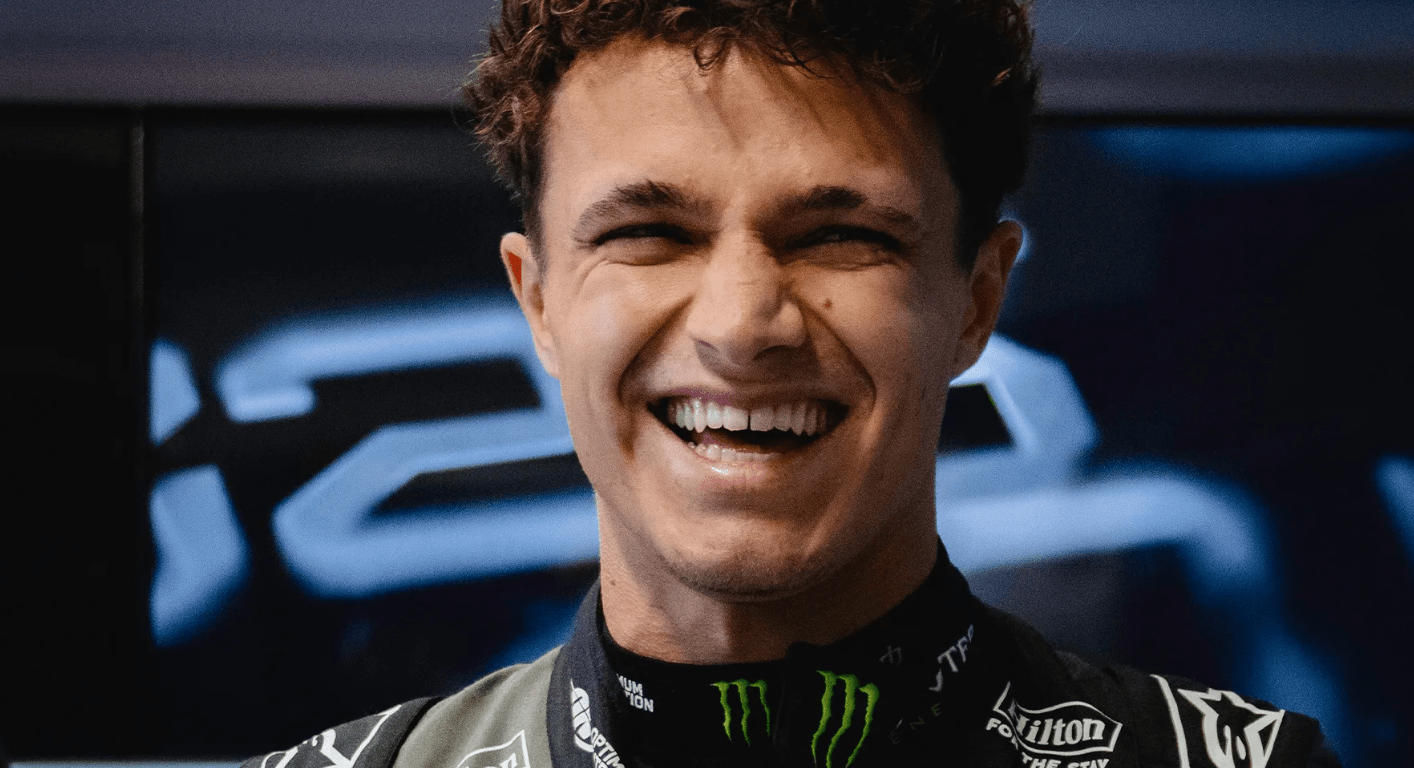
3. Can Lando Norris Repeat?
In normal years, the defending Drivers/Constructors Champion comes into the new season as the favorite. But this year is far from normal. The pressing question today is how Lando Norris and McLaren will adapt to the massive changes in technical regulations.
Lando has earned the support of tens of millions of supporters worldwide. In 2025, he finally realized his dream of winning the F1 world title 11 years after becoming the youngest karting world champion at age 14. And he did it the right way by most accounts — with honest, aggressive driving and minimal off-track drama. He genuinely seems like a nice guy who found his edge.
Last season, after DNFing at the Dutch Grand Prix with a mechanical, Norris went into attack mode to claim two victories and six podiums in the final nine races – not including his second place in Vegas before he was disqualified for excessive skid block wear. His final two-point victory margin in the Drivers Championship over Red Bull Max Verstappen was the closest finish since Lewis Hamilton topped Felipe Massa by a single point in 2008.
So the questions for Lando are: Can he maintain his tenacious mindset in 2026? And will it serve him well in this new era when drivers and race engineers need to operate on track with scalpel-like precision?
4. Mercedes’ Comeback Plot
Such is life at Mercedes that finishing second in the Constructors Championship is considered a disaster. But that’s reality for Toto Wolff and company. They expect (and are expected) to contend for the title every year. But in 2025, they finished as runners up behind McLaren with a massive gap of 364 points.
The team struggled with race pace and tire management too often. George Russell notched two wins (Canada and Singapore) and nine podiums. But everyone involved felt Russell’s consistent driving actually camouflaged numerous problems with the car. Russell’s teammate, rookie Kimi Antonelli, grabbed three podium spots to highlight one of the best seasons by an F1 debutante in decades. Unlike Russell, Antonelli seemed to get stronger as the season closed with a second place in Brazil and a third place in Vegas.
Fans of the Silver Arrows have been buoyed by good news during 2026 preseason testing. At the Barcelona shakedown in January, Mercedes amassed more than 1,440 miles on track with Russell taking second-fastest time — impressive feats considering the brand new car. By the end of shakedown week, Mercedes was running quali and race simulations.
Will this performance carry over to the season? If history is our guide, keep in mind that F1 introduced the 1.6-liter turbocharged hybrid power unit in 2014. Mercedes quickly mastered the new tech and went on to win the Drivers Championship and Constructors Championship seven consecutive times. Will lightning strike for them again?
5. Ferrari’s Redemption Quest
No one suffers like a Ferrari supporter. Ferrari has won more F1 Constructors Championships than any other team, yet their most recent victory was 2008. As for Drivers Championships, Kimi Raikkonen was their last winner in 2007.
Last season was a hot mess for Ferrari, as it was the first time they failed to win a Grand Prix since 2021. The idea that the car was unreliable is false: Charles Leclerc had zero mechanical failures across all 24 races. The problem was speed: Ferrari managed just one pole position and two fastest laps all season.
Things got so bad that midway through the 2025 season, Frederic Vasseur and his crew essentially stopped upgrading the car to focus their efforts on the 2026 edition. It’s early days, but Ferrari has shown some promising signs. In Barcelona, Leclerc and Lewis Hamilton ran 440 laps in the new car, with Hamilton claiming the best lap time among all drivers.
Hamilton would like to forget 2025. He not only failed to win a Grand Prix; he also failed to claim even one podium spot. Tensions between Hamilton and his race engineer, Riccardo Adami, were on full display. Recent reports indicate Ferrari will tap former McLaren engineer Cedric Michel-Grosjean to take Adami’s place. As of this writing, Adami was on gardening leave from McLaren.
Can the Prancing Horse close the gap to McLaren, Mercedes and Red Bull? The ground-effect era certainly did Ferrari no favors, so this new age at least brings new hope.
6. Red Bull Charts a Whole New Course
To say Red Bull is embarking on a new F1 journey would be a huge understatement. This season represents the most challenging transition in the team’s history. Engine supplier Honda is finally gone. From 2022 to 2025, the team used Honda engines under the banner of Red Bull Powertrains. Now Red Bull has taken on the work of building its own power units, with Ford coming on as co-developer and returning to F1 for the first time since it shuttered its Jaguar team in 2004.
As for personnel, of course Christian Horner has been dismissed following two decades of architecting the Red Bull dynasty. But gone with him is the massive distraction he was causing. Perhaps more devastating, uber designer Adrian Newey has departed for Aston Martin after nearly 20 years with the team. Moreover, sporting director Jonathan Wheatley chose to move on, eventually taking the team principal role with Audi.
New CEO and team principal Laurent Mekies has jumped over from sister team Racing Bulls to take charge at Red Bull. He has 25 years of experience in F1. He will need to leverage every bit of that expertise to ensure the team doesn’t slide down the grid after finishing third in the Constructors Championship last season. That was their worst finish since 2019, their first year using Honda engines.
7. The Debuts of Cadillac and Audi
It’s no secret F1 if obsessed with cracking the U.S. market. Since Colorado-based Liberty Media acquired Formula One Group in 2017, they have added domestic races and invested billions in attracting American eyeballs.
In 2026, we’ll see the biggest step on this journey with the addition of the Cadillac team. Backed by General Motors, Cadillac becomes the first new competitor since Haas in 2016, taking the 11th spot on the grid. With staff in Indiana, North Carolina and Michigan, as well as the U.K., the team will run Ferrari power units initially.
Cadillac also made the brilliant move of signing two of the most popular drivers in the world to pilot their new cars: Valtteri Bottas and Checo Perez. The team is owned and run by TWG, which operates at least six other motorsports teams — although this is their first venture into F1.
A pressing question for Cadillac is: Have they had enough time to prepare for the 2026 season? Obviously, TWG absorbed Andretti, which had been working toward competing in F1 for years. But in reality, TWG’s project was only approved in March 2025. So we shall see if 12 months was sufficient to get a viable car on track.
As for Audi, they enter Formula 1 as a works team under the Audi Revolut name. Their debut is rooted in Audi’s acquisition and strategic partnership with the former Sauber organization. Unlike Cadillac, this provides them with a standing F1 operation and foundation of skills to build on.
Audi’s program also marks the return of former Ferrari team principal Mattia Binotto to F1. He is directing both the chassis and power unit integration. He failed to win a title with Ferrari and was often chastised for poor strategy decisions. Thankfully for Audi fans, Binotto should stay away from the pit wall as Jonathan Wheatley has been brought in from Red Bull as team principal to run day-to-day operations.
Another fan favorite driver, Nico Hulkenberg, will pair with reigning Formula 2 champion Gabriel Bortoleto to pilot the cars. Hulkenberg, 38, is a man worth cheering for. He made all of F1 smile last season when he finished third in the British Grand Prix, ending a record 239-race streak without a podium position.

 Full Throttle Media