
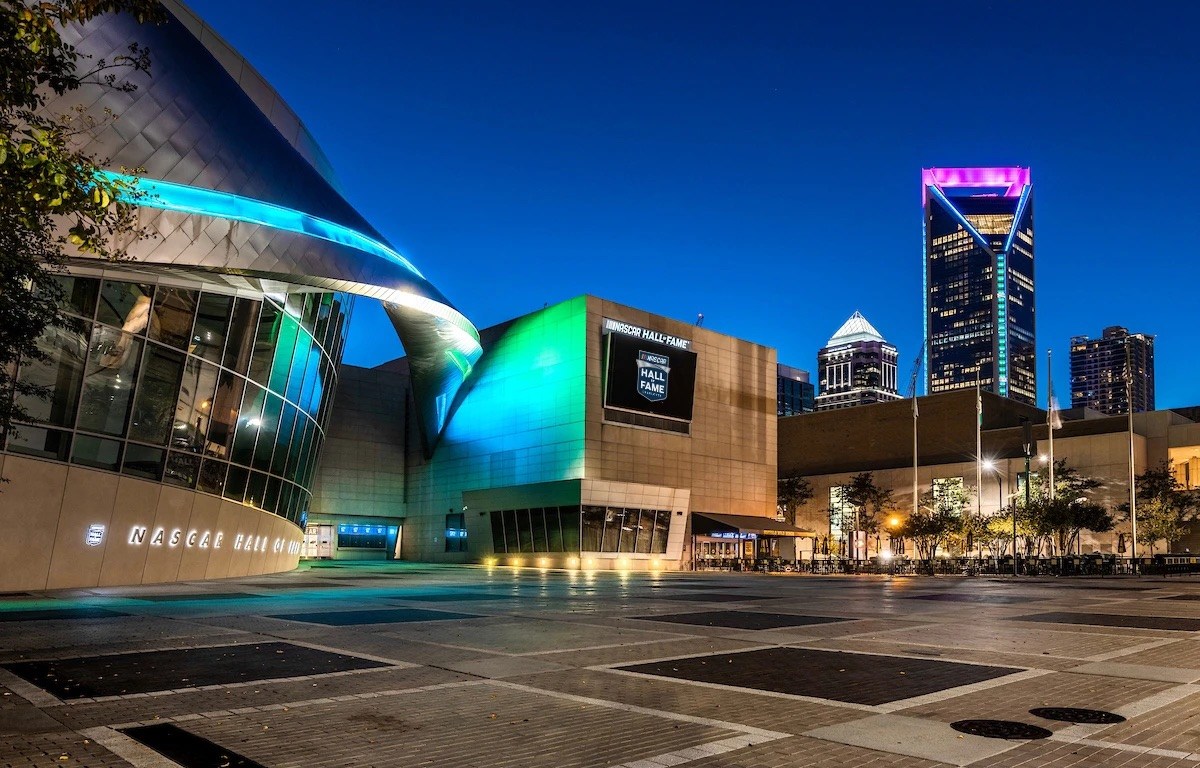
The NASCAR Hall of Fame is poised for its most significant transformation since opening its doors 15 years ago. Hall of Fame officials presented their ambitious renovation proposal to Charlotte City Council’s economic development committee on Monday, requesting $25 million in public funding to modernize the uptown facility.
The proposed renovations represent a comprehensive overhaul of the visitor experience at the facility located near the intersection of Brooklyn Village Avenue and Caldwell Street. Key improvements include:
- Relocated retail and dining areas: The gift shop and cafe will be repositioned to enhance visitor flow and accessibility
- Expanded event capabilities: Additional event space will accommodate larger gatherings and special programs
- Enhanced security infrastructure: New screening equipment will be installed to meet modern safety standards
- Dedicated educational facilities: A new space specifically designed for school groups will support the Hall of Fame’s educational mission
The $25 million price tag breaks down into specific categories, with $12 to $15 million allocated for construction costs. The remaining funds will cover design work, permitting, furniture, and miscellaneous expenses. Officials noted that costs “will be refined as design advances,” indicating the budget may be adjusted as planning progresses.
Funding will come from Charlotte’s hospitality fund, which derives revenue from hotel occupancy taxes, rental car fees, and prepared food and beverage taxes. This funding mechanism is particularly appropriate since the money can only be spent on tourism-related projects, and the Hall of Fame qualifies under these restrictions. Notably, construction and maintenance at the facility is specifically supported by a 2% hotel occupancy tax.
The Hall of Fame’s economic contribution to Charlotte remains substantial. According to data presented to committee members, the facility generated $74.9 million in economic impact during fiscal year 2024. This figure includes $43.1 million in direct spending and $2.4 million in tax revenue, demonstrating the facility’s continued value to the local economy.
The facility operates under a unique public-private partnership model. While the city of Charlotte owns the building, the Charlotte Regional Visitors Authority handles day-to-day operations, creating a collaborative approach to managing this significant tourism asset.
Committee Chair Malcolm Graham expressed optimism about the proposal, emphasizing the facility’s need for modernization. “It’s a facility that has not had any major upgrades since its inception, other than minor modifications to be more effective and efficient,” Graham explained. His District 2 includes portions of uptown Charlotte, giving him direct insight into the facility’s role in the community.
The formal request process will unfold over the coming months. Assistant City Manager Alyson Craig indicated that Hall of Fame officials will submit their official proposal later this summer or in early fall. Graham suggested the economic development committee could potentially vote on the plan as early as August, setting the stage for a relatively quick decision-making process.
This renovation represents more than just facility improvements; it signals Charlotte’s continued commitment to maintaining its position as a premier destination for NASCAR fans and motorsports enthusiasts. The 15-year gap since the last major upgrades makes this investment particularly timely, as visitor expectations and facility standards have evolved significantly.
The success of this proposal will depend on city council’s assessment of the economic benefits versus the public investment required. With strong initial support from committee leadership and a clear funding mechanism already in place, the NASCAR Hall of Fame appears well-positioned to secure the resources needed for this transformative upgrade.
As Charlotte continues to grow as a major metropolitan area, investments like this renovation help ensure that key cultural and tourism assets remain competitive and relevant for future generations of visitors.

 Full Throttle Media