
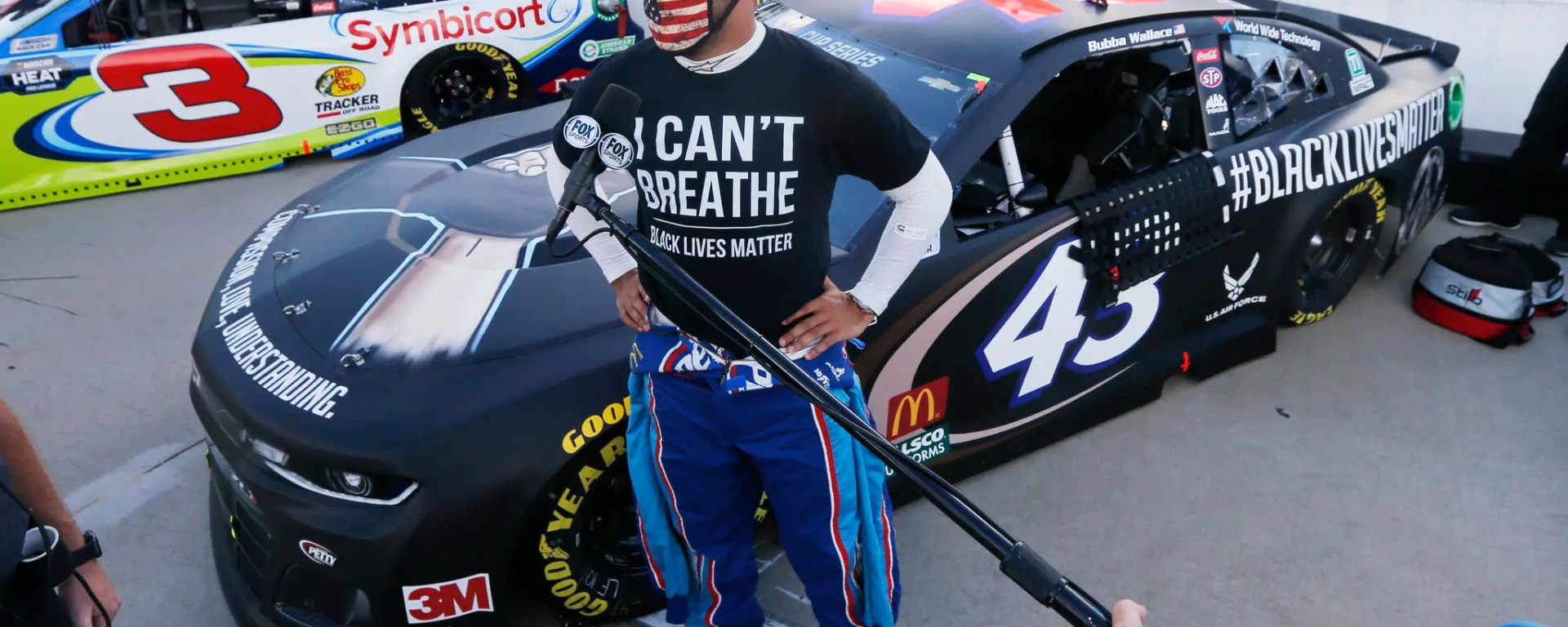

As we celebrate Black History Month this February, it is an opportune and important time to take an expansive look at the groundbreaking achievements and barrier-shattering legacies of African American drivers, owners, crew members, and other pioneers who have broken new ground in the world of NASCAR racing for decades.
While strides still need to be made, the stories of Black racing pioneers who persevered in the face of prejudice, oppression, and adversity remain an inspiration. Their legacies paved the way for greater diversity and inclusion in a sport where people of color were once excluded entirely. They instill hope that talented individuals, regardless of race or background, can succeed at the sport’s highest levels. During Black History Month, we honor racing trailblazers like Wendell Scott, Willy T. Ribbs, and Bubba Wallace. But there are so many more monumental achievements worth celebrating across NASCAR’s history. Let’s explore some of those stories and understand how these racers and innovators opened doors, left their mark on the record books, and inspired new generations to pursue their dreams.
Wendell Scott: NASCAR’s Civil Rights Pioneer
No celebration of Black history in racing is complete without honoring Wendell Scott, the first African American driver to win a race at NASCAR’s highest level. Scott overcame oppressive racism throughout his career in the 1960s and still managed to etch his name in the record books. However, his remarkable victory at Jacksonville in 1963 was overshadowed by prejudice.
Racism was so deeply ingrained in society that Scott was denied his victory despite crossing the finish line first. Blatant discrimination meant officials handed the win to a white driver, Buck Baker, instead of recognizing Scott’s historic achievement. It took decades of campaigning before NASCAR finally corrected this appalling injustice and formally gave Scott credit for the win in 2021, more than 50 years later.
The Jacksonville victory capped off Scott’s trailblazing career, where he consistently defied the era’s bigotry to race against NASCAR’s top drivers. Fans pelted Scott with racial slurs and violence. He was barred from restaurants and bathrooms at southern tracks. But Scott persevered to pave the way for other Black drivers, even as NASCAR largely ignored his accomplishments for years.
Scott’s legacy instills hope that future talents could overcome similar obstacles to succeed in racing. He took pride in the next wave of Black drivers that emerged after him, once saying, “I was determined not to be denied…I broke down all the barriers, and a lot of the younger Negro drivers are benefitting from it.” Truly a civil rights pioneer.
Barrier-Breaking Drivers of the 1960s-70s: Second Meeting of the Titans
While Scott opened doors in the 1960s, other courageous Black drivers also broke barriers amid the tense Civil Rights era, facing white racism that tried to deny their dreams. Men like Elias Bowie, Charlie Scott, and Charlie Wiggins left an indelible mark in a sport where they didn’t belong according to the prejudices of the time.
In 1969, Wiggins was set to race the fearsome Richard Petty at the Atlanta 500, the first time a Black driver would ever compete at a superspeedway race. Of course, bigots threatened Wiggins’ life leading up to the event, with the KKK intimidating the driver with warnings of violence if he raced. Showing incredible fortitude, Wiggins took the track anyway and finished a stunning 6th after starting 36th.
The grit displayed by Wiggins and others turned the myth of Black inferiority on its head. Drivers like Bowie became the first African American to lead a lap in NASCAR’s top series in 1964. Charlie Scott broke records and won a NASCAR Late Model Sportsman race in 1971. Their excellence forced white competitors and fans to confront their prejudices.
Slowly but surely, these courageous individuals laid the foundation for greater representation, even if NASCAR was still far from truly inclusive. Their competitive spirit in the face of hatred would inspire future Black racers to pursue their dreams.
Willy T. Ribbs: Pioneer at the Brickyard
By the 1980s, African Americans were still vastly underrepresented in top-tier racing, but driver Willy T. Ribbs exemplified the competitive fire lit by trailblazers before him. After becoming the first Black driver to win a Trans-Am series race in 1983, Ribbs set his sights on an even bigger milestone – the iconic Indianapolis 500.
The Indy 500 was the white-dominated crown jewel of American motorsports, and no Black driver had ever qualified for the event. Undeterred, Ribbs broke through in 1991 to cement his place as the Jackie Robinson of IndyCar racing. Though engine troubles cut his race short, Ribbs succeeded in integrating a famous race that had excluded people of color for decades.
Ribbs carried enormous weight on his shoulders as a racial pioneer. “I was a Louis, Ali, Jesse Owens, Jackie Robinson – everyone rolled into one,” he recalled. Ribbs proved he deserved to be there on pure talent alone, laying the groundwork for a more inclusive era at Indianapolis Motor Speedway.
Bill Lester, NASCAR’s Black Pioneer of the Modern Era
By the early 2000s, NASCAR’s prejudices remained, but African American driver Bill Lester overcame doubts and naysayers to break his barrier. After success in sports cars, Lester became the first Black driver in 20 years to compete full-time at NASCAR’s top Cup level when he joined the circuit in 2006.
It had been decades since Wendell Scott drove for underfunded minority teams. Now, Lester had the chance to show what a Black driver could accomplish with proper funding and equipment at stock car racing’s highest echelons.
While Lester’s results were humble, they missed the bigger point. He brought welcome diversity to a very white sport and opened the door for today’s talents like Bubba Wallace, inspiring African American youth that NASCAR was now an attainable goal. “If I can do it, you can do it too,” Lester shared. His quiet persistence complemented louder calls for change.
Bubba Wallace Sparks a Cultural Shift
No modern driver has spotlighted the progress and ongoing challenges for African Americans in NASCAR more than Bubba Wallace. With Wallace’s competitive success, a cultural shift emerged that was unthinkable in earlier eras, plagued by racism and exclusion.
Wallace’s outspoken stance against racial injustice in 2020, combined with his raw talent behind the wheel, cemented him as a leading voice the sport badly needed. He called for banning the Confederate flag – a symbol of hate – from NASCAR events, and officials listened. Removing such an ingrained symbol signaled long overdue social change.
Winning races as a popular Black driver added exclamation points to Wallace’s platform for equality. His first career Cup victory in 2021 came at Talladega, once home to some of NASCAR’s ugliest racism. Wallace’s success on the track showed how far society had progressed since drivers like Wendell Scott raced in a climate of bigotry decades ago.
From crew members to team owners and beyond, African American representation was rising across the board. But it was Wallace who grabbed headlines by unapologetically standing up for social justice in a uniquely public position. He carried the torch lit by pioneers before him into the modern era. The journey continues, but Wallace and others have sparked hope for a more inclusive NASCAR future.
21st Century Progress but Work Still to Be Done
The 21st century brought greater focus on diversity and inclusion for NASCAR. The Drive for Diversity program opened doors for minority drivers, including talented young stars like Wallace, Kyle Larson, and Daniel Suárez. But for all the progress, NASCAR’s diversity still fails to reflect America’s population at large.
Estimates suggest less than 5 percent of NASCAR drivers are non-white, while Black fans represent a small fraction compared to overwhelmingly white crowds. So, while pioneers of earlier generations broke barriers, their legacy also reminds us that NASCAR still has work to do on racial representation up and down the organizing body.
From Bill Lester’s courage to Bubba Wallace speaking out, the tenacity of African American pioneers past and present gives hope that talented individuals of all races will one day thrive in a more inclusive NASCAR. But it is on all of us – officials, team owners, sponsors, and fans – to carry this legacy forward.
Honoring Legacies, Celebrating Achievements
The stories explored here represent only a fraction of the groundbreaking achievements of African Americans who carved out a place for themselves in the white-dominated world of NASCAR, facing racism but never giving up on their dreams. Their legacies reveal how Black excellence touched every corner of racing, from Wendell Scott’s resilience to Bubba Wallace’s stand. During Black History Month, take time to honor figures like Scott and Wallace, but also discover the many more untold stories. Appreciate how these racers, owners, and innovators paved the way for diversity when NASCAR resisted change at every turn. Recognize that the journey toward inclusion remains ongoing. These men and women of color quite literally put their lives on the line at times to show that racing talent transcends skin color. By celebrating their monumental achievements in the face of oppressive prejudice, we renew our commitment to the work still required to make NASCAR a sport open and welcoming to all.

 Full Throttle Media
Welcome to wordpress! I look forward to reading your posts, i write album reviews and would very much like to see you on my site 🙂 have a great day!
LikeLiked by 1 person